iOS & Android
React Native
Build for both platforms with React Native and Expo. The SpeziVibe template generates an app with your choice of backend and optional features.
React Native templateStanford Spezi · Free & open source
Stanford Spezi brings together tools for building digital health apps. Start with SpeziVibe to plan and build with AI, then choose a React Native template, the Apple-native Spezi framework, or your own stack.
SpeziVibe guides the planning and implementation across all three paths. The templates give you an app foundation; your needs determine which one to use.
For help choosing a starter, compare React Native and Apple-native. The React Native template includes its own implementation skills. Bridges to native Spezi modules are on its roadmap; the Swift modules below are for Apple-native apps.
For Swift and SwiftUI apps, the Spezi framework provides reusable packages for accounts, consent, questionnaires, connected devices, and more. Each module handles a part of your app, and Spezi helps them work together.
Apple-native module examples from the Spezi GitHub repositories. Select a screen to explore its module.
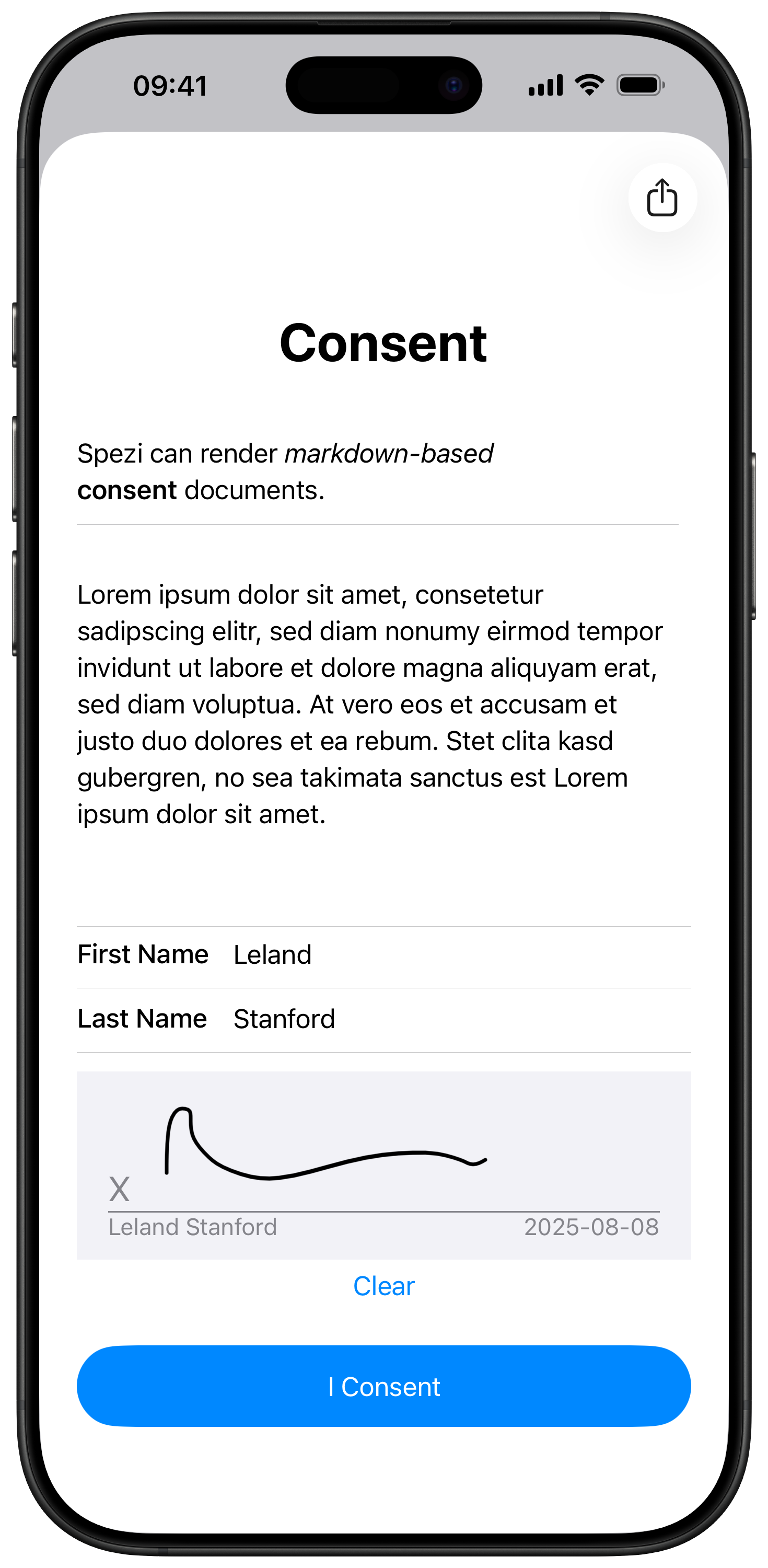
Create onboarding steps and let people read, sign, and export consent documents.
Add sign-up, sign-in, password reset, and account details with a configurable account service.
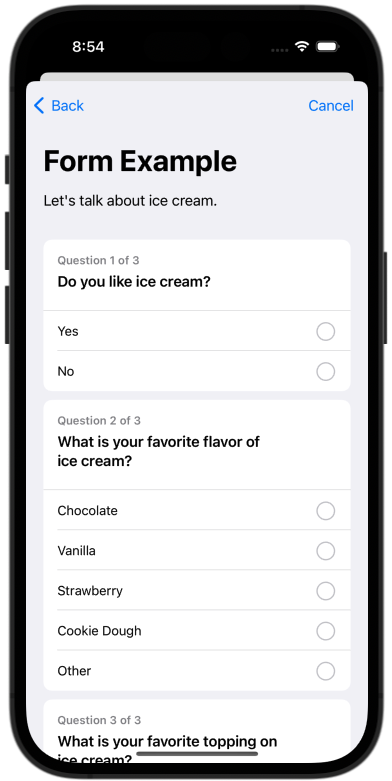
Display questionnaires in the FHIR health data format and collect structured responses.
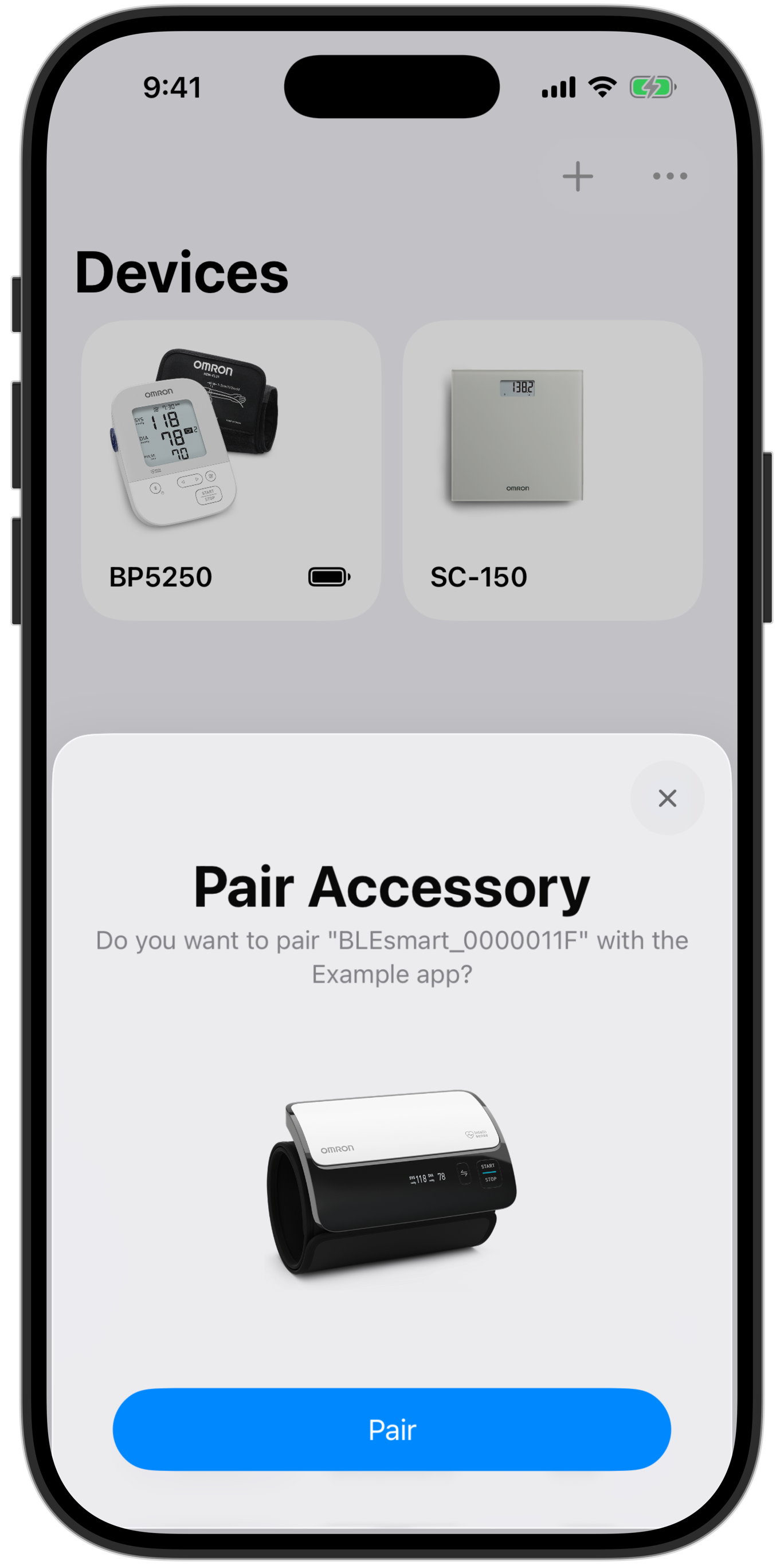
Pair supported Bluetooth devices and collect measurements from devices such as scales and blood pressure monitors.
Collect Apple Health data, organize FHIR records, and develop with mock patient data.
Add language-model interactions using local models on supported devices or a remote service.
Follow the Apple-native template guide to run and adapt an app in Xcode on a Mac, or add Spezi to an existing Swift project.
Explore the full ecosystem on GitHubFrom cardiac research to accessible spatial computing: apps and study integrations from Stanford Biodesign Digital Health and its collaborators.
Heart failure
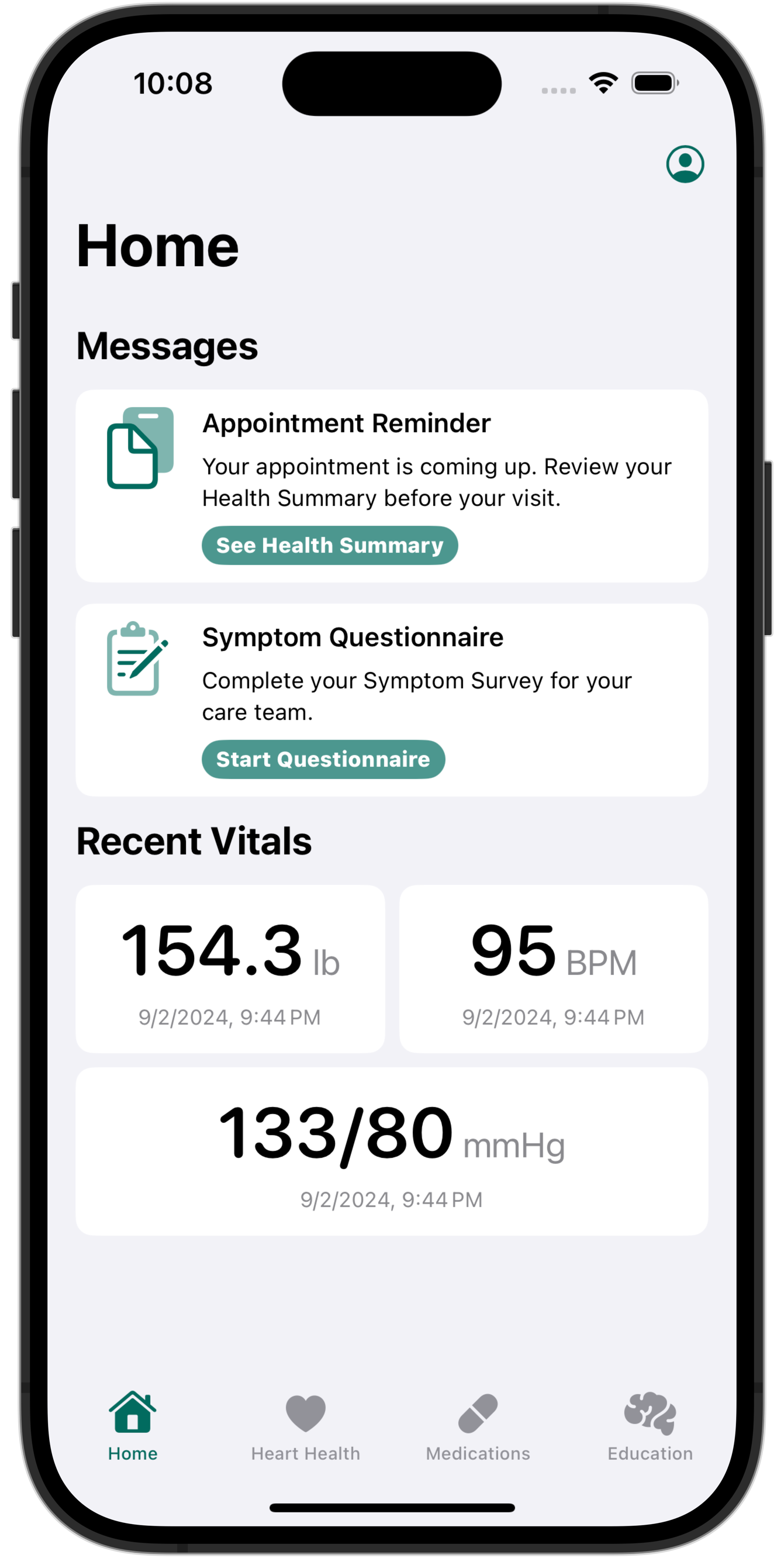
Home monitoring for a heart failure study, combining Bluetooth weight and blood pressure readings, symptom surveys, and medication recommendations.
Explore ENGAGE-HF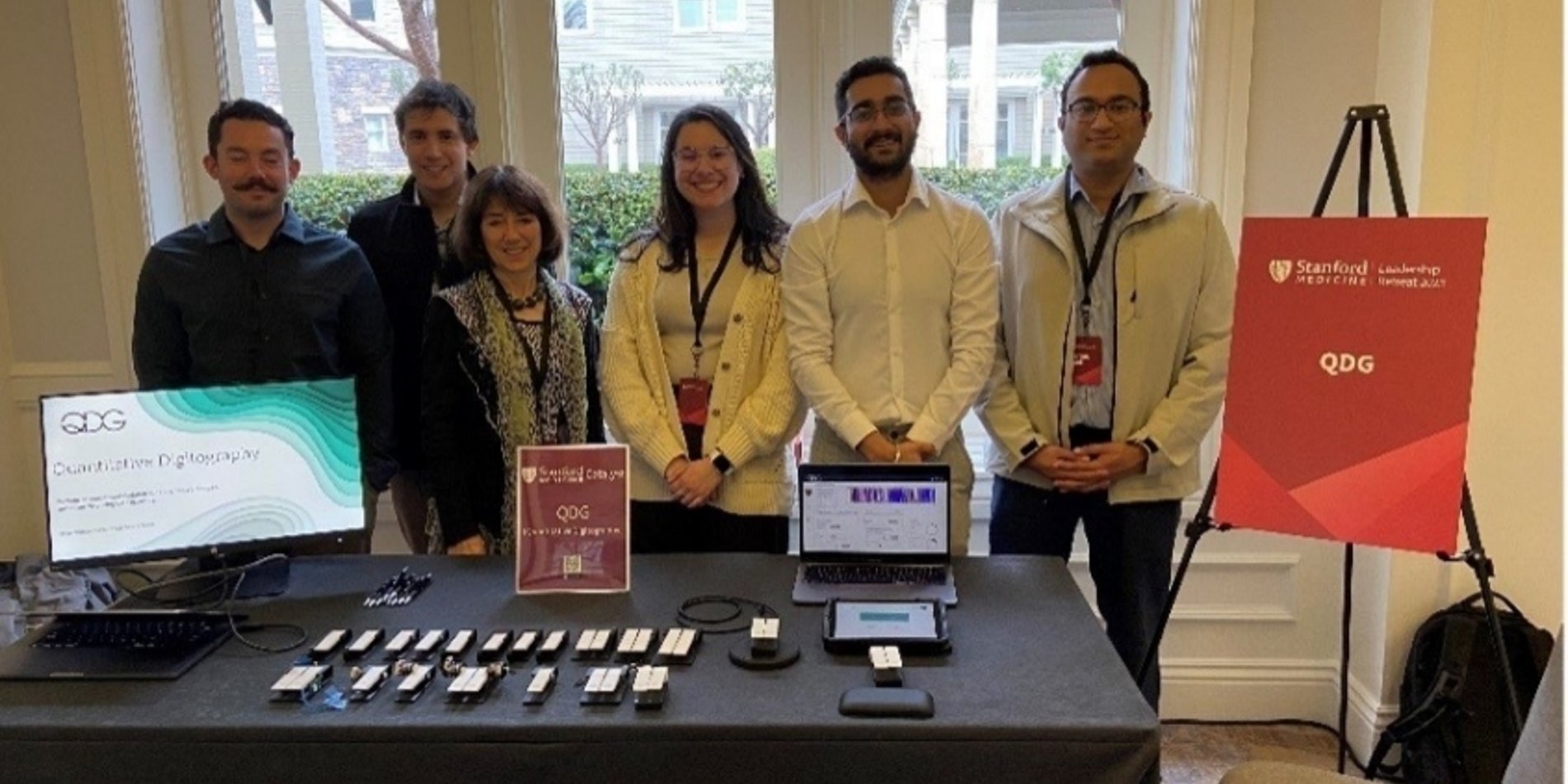
Parkinson’s research
Connect a Bluetooth finger-tapping device, a Spezi mobile app, and a clinician dashboard for remote monitoring of Parkinson’s disease.
Explore QDG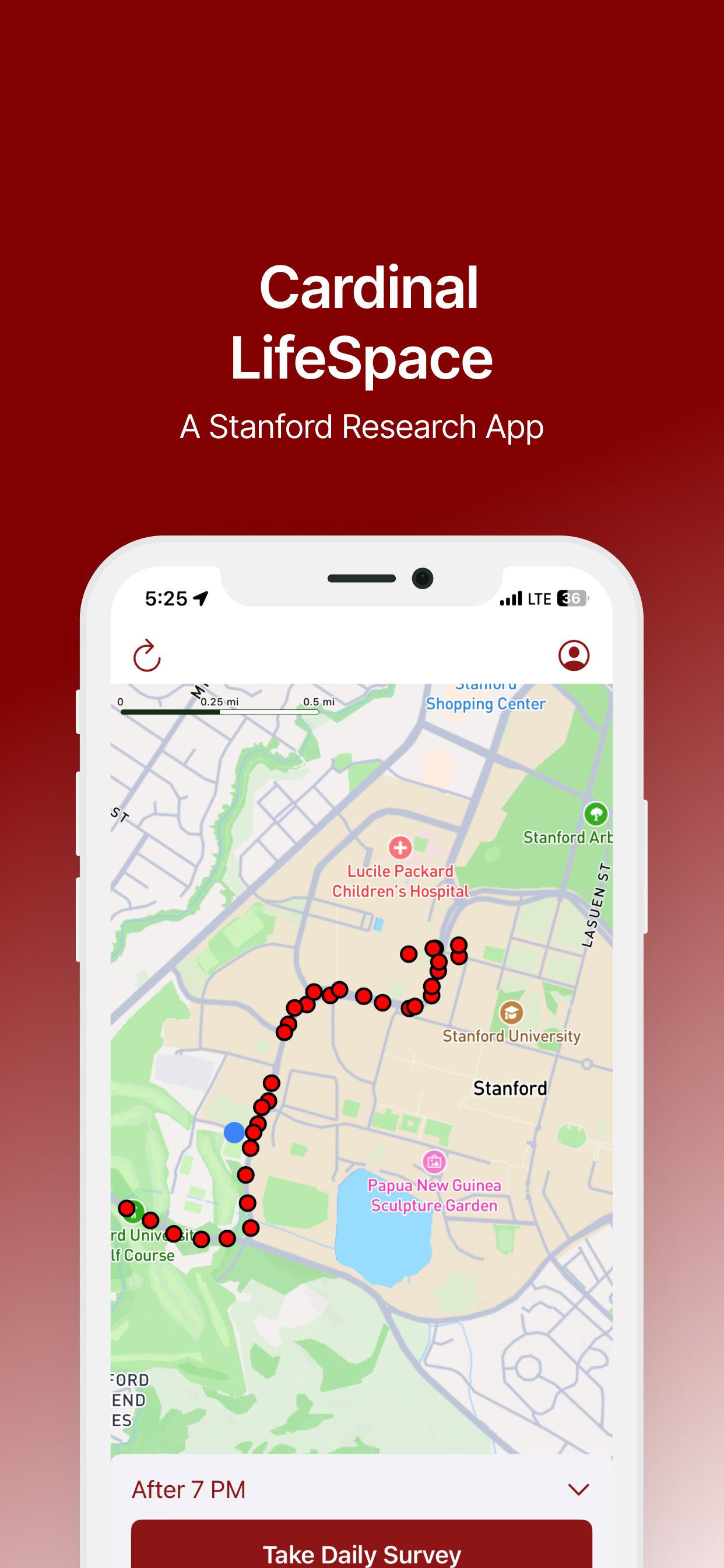
Mobility & environment
Study the relationship between daily movement, environmental conditions, and health with location tracking, activity data, and daily surveys.
Explore LifeSpace
Cardiac research
Collect Apple Watch ECG recordings for pediatric research, with Spezi handling health data access, accounts, and scheduled reminders.
Explore PAWS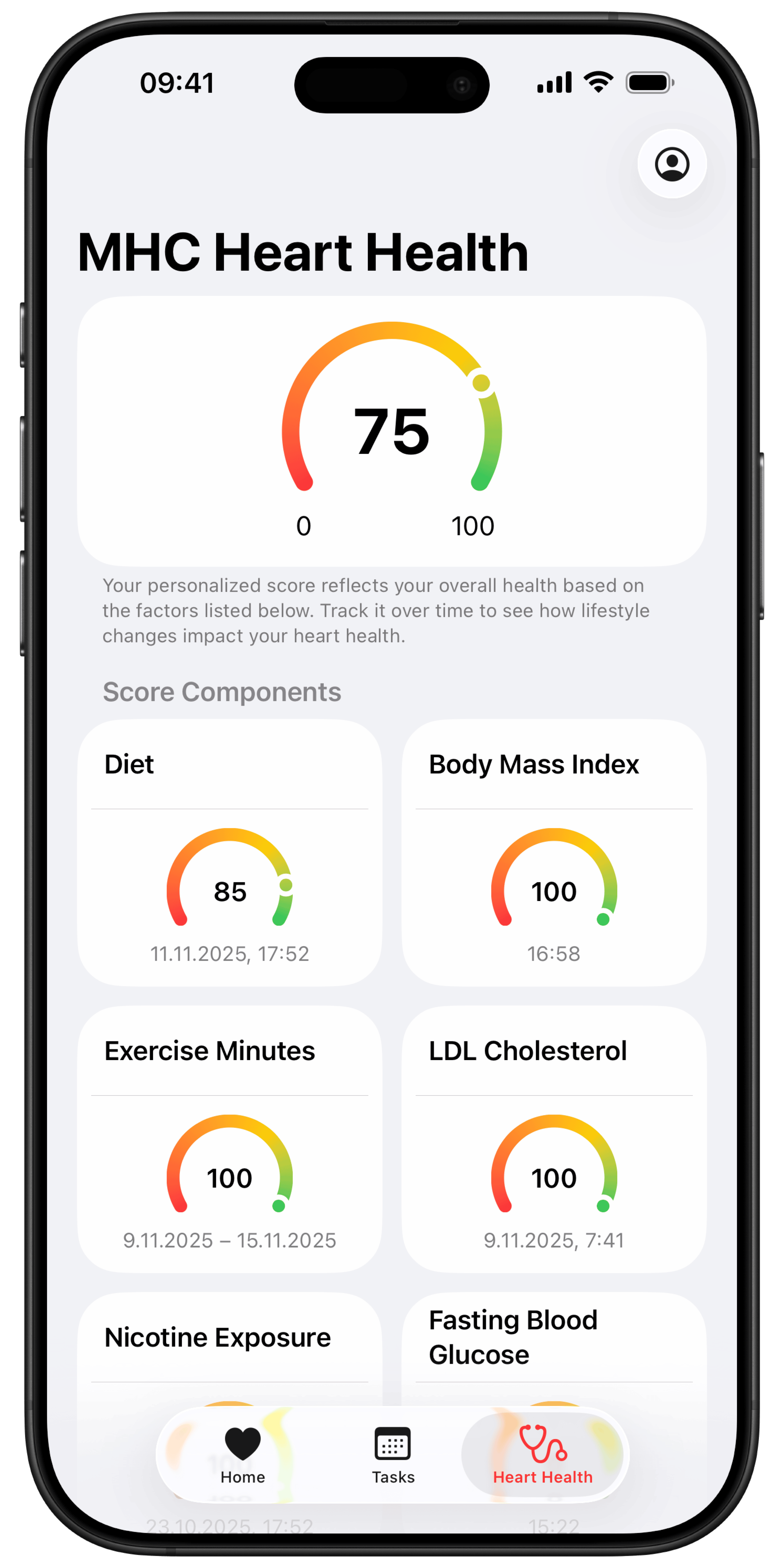
Cardiovascular research
A Spezi-based cardiovascular study app with HealthKit and SensorKit data collection, active tasks, a heart health dashboard, and personalized physical activity coaching.
Explore My Heart Counts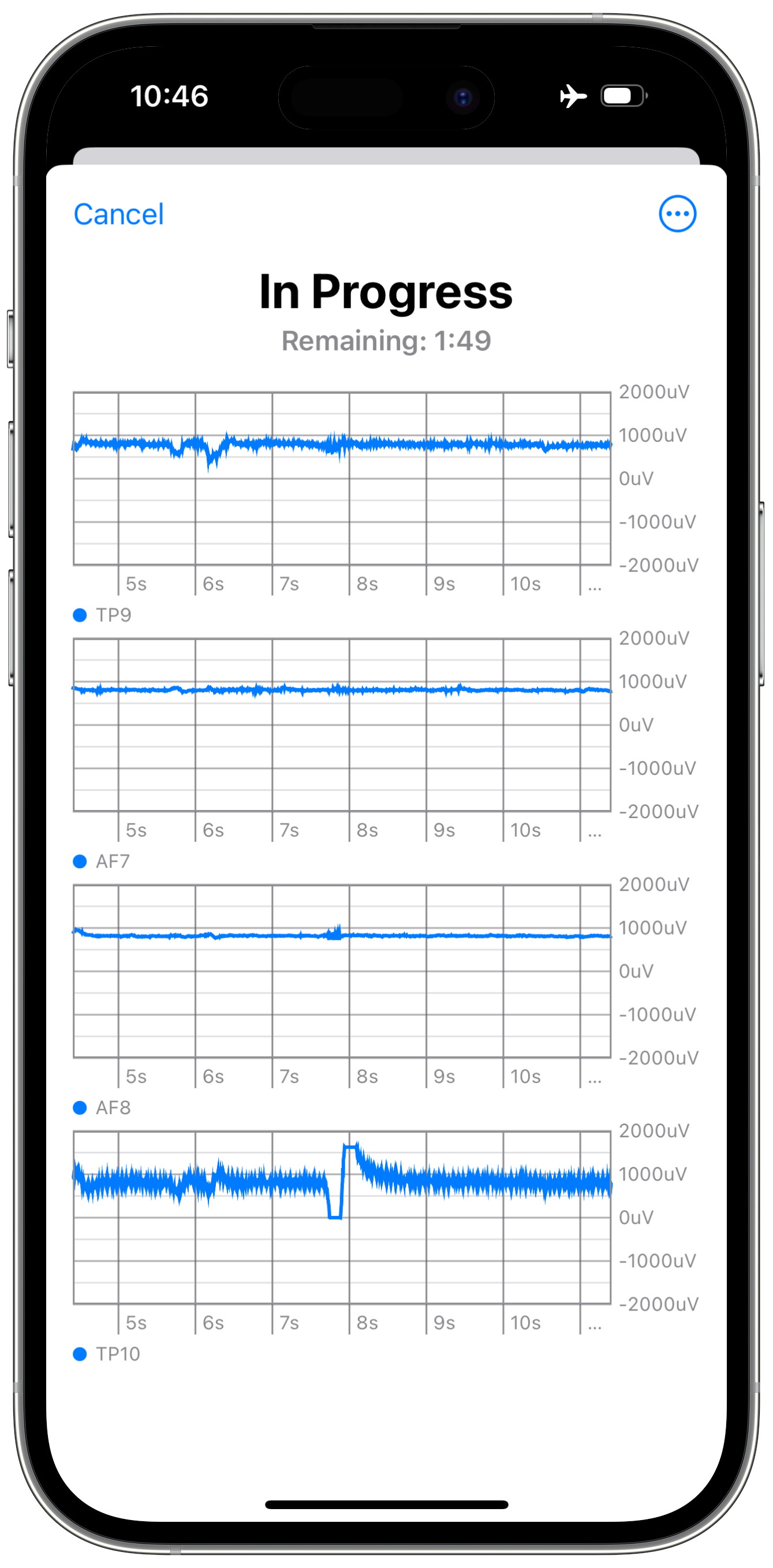
EEG & screening
Record EEG signals from supported Bluetooth devices and collect screening questionnaire responses. Explore the app in the NAMS repository.
Explore NeuroNest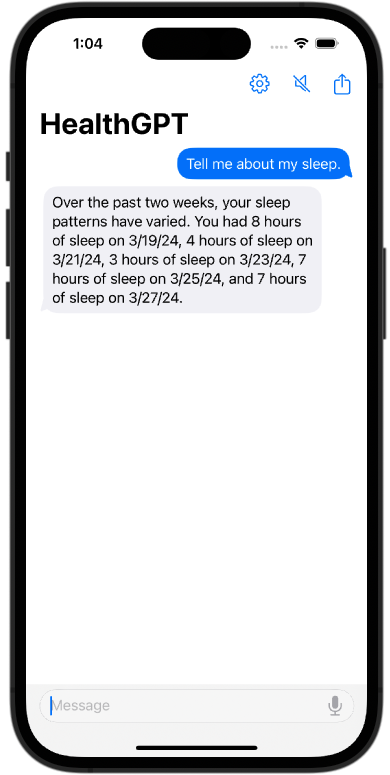
Experimental app
Explore Apple Health data through conversation, using Spezi HealthKit, Chat, and LLM modules.
Explore HealthGPT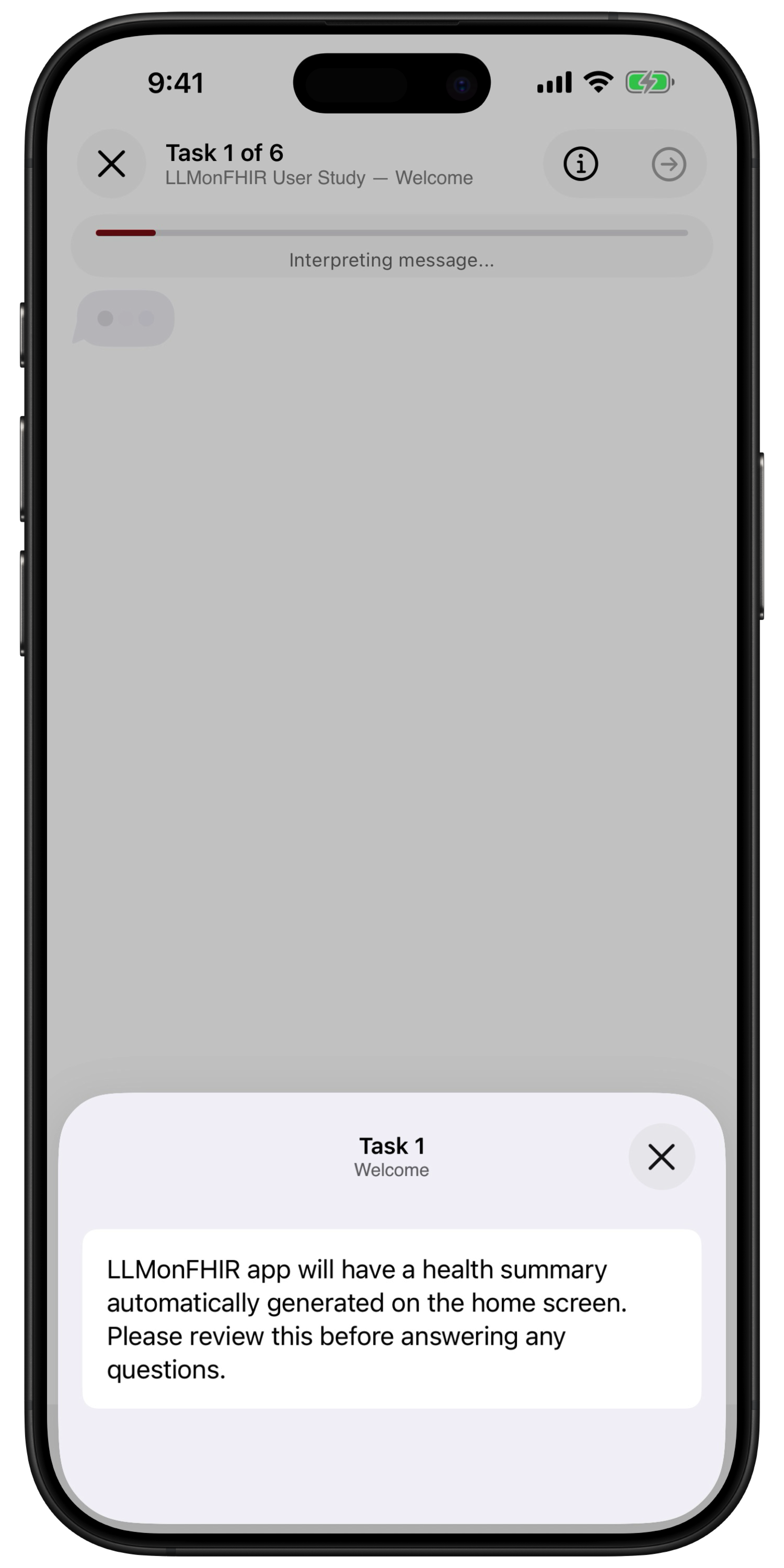
Research app
Study how conversational AI can help people understand health records in FHIR format.
Explore LLMonFHIR
Accessibility prototype
Explore low-vision accessibility with an iPhone camera stream on Vision Pro and spoken image descriptions powered by Spezi LLM.
Explore Spatial ContinuityDigital interventions
Bring Spezi into an existing app. This package implements the integration for the one sec app’s Digital Interventions Outcome study.
Explore the integrationClinical trial access
Use health records to find relevant NCI-supported cancer trials, with the aim of broadening representation in clinical research.
Explore OwnYourDataProject images are from their repositories and Stanford Biodesign Digital Health.
Explore more Stanford Biodesign Digital Health projectsSpezi is housed at Stanford Biodesign and released under the MIT license. Explore the code, ask a question, or contribute a module of your own.